
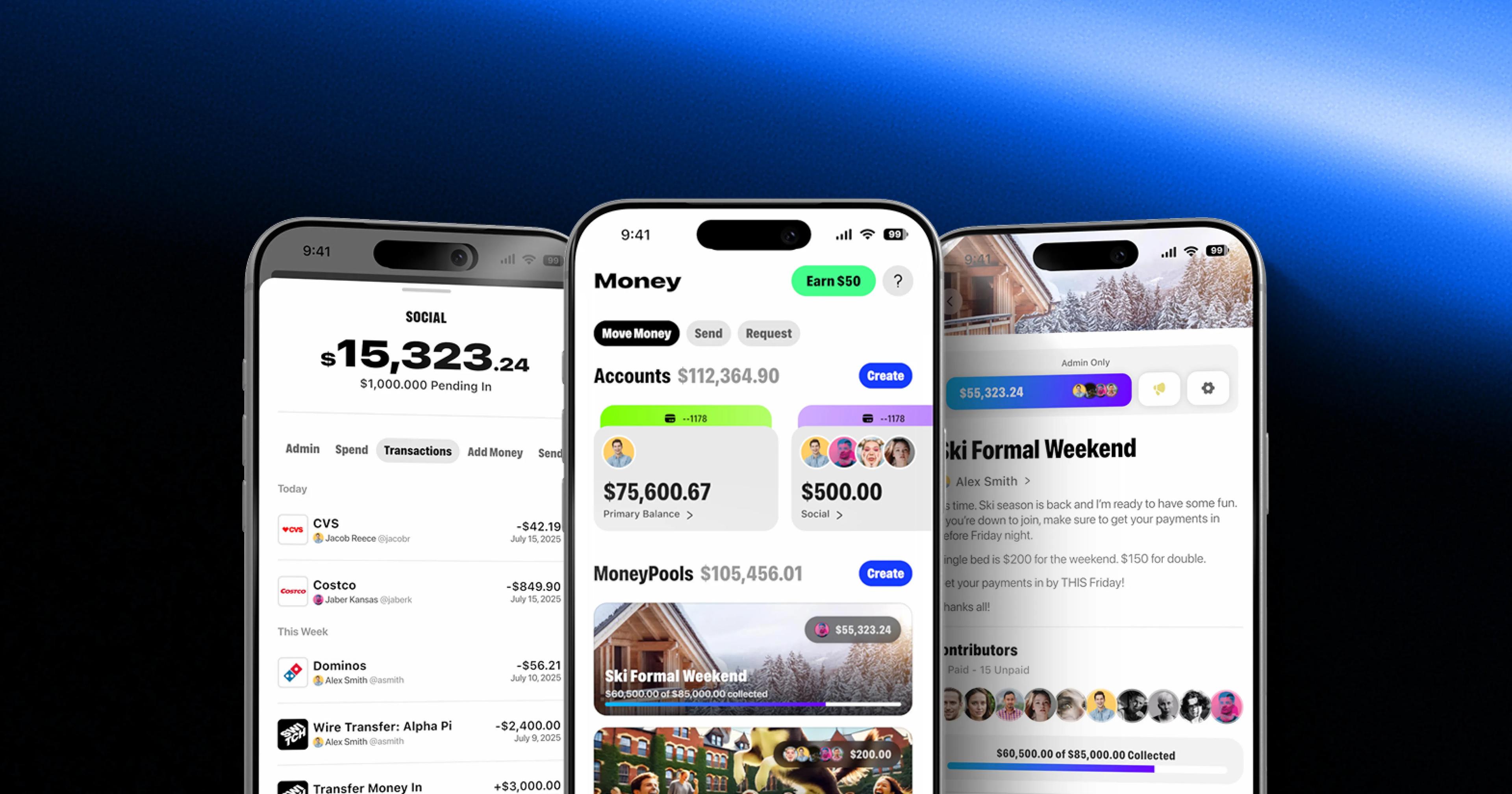

 Web platform
Real estate · CRE
Relm: multi-agent AI that finds hidden deal risk in commercial real estate
Minutesaddress to Intel Report
We design and build autonomous AI agents and multi-agent systems that read, decide and act across your tools, with human approval where it matters.
 What you get
Specialist agents for research, extraction, decisions and actions, coordinated by one controller that tracks state, retries failed steps and stops a run when confidence drops below its threshold.
Agents read and write to your CRM, ERP, databases, email and internal APIs with permissions scoped per action, and MCP servers let outside agents such as Claude or Grok use your app.
Approval steps for anything that moves money, changes records or reaches a customer, escalation rules for uncertain cases, and an audit log of every input, decision and action.
A test set of real cases with known outcomes, scored on every prompt, tool or model change. A release fails if accuracy drops below the bar agreed in discovery.
Per-action permissions, PII redaction before model calls, checks against prompt injection in incoming content, and zero-retention model endpoints where the provider offers them.
Dashboards for cost per task, latency, success rate and drift in production, with alerts when a workflow starts failing or spends past its budget.
Map one workflow and one metric.
Agent running on your real data.
Evals, guardrails, integrations.
Ship, measure, expand.
First agentPick work with high volume, rules you can write down, systems that have APIs, one number that shows success, and actions you can undo. That is our rule of thumb from scoping agents, and it shortens a long wish list fast.
Sorting inbound requests and routing them, pulling fields from documents into your system of record, and drafting replies a person approves. Each has a right answer you can test against past cases.
If the work starts and ends inside one SaaS product, its vendor’s built-in agent costs less than a build. For a task that comes up a few times a week, a script or a checklist wins.
The agent finds and ranks creators across Instagram, TikTok and YouTube and explains why each fits, so the brand team checks a shortlist instead of searching. That is the kind of high-volume, easy-to-check work a first agent should do.
Collect 50 to 100 past cases with known outcomes. They become the first evaluation set. If you can’t find them, the workflow isn’t ready for an agent yet.
Ask each one to show the evaluation suite and audit log of an agent running in production, not a demo video. How to evaluate an AI agent company
Our rule: the first agent should save hours on dull work you can check, not make your riskiest decision. AI agent guardrails
Stack by categoryBuild or buyOff-the-shelf agents start faster. Custom agents win when the work crosses systems or carries real risk.
| Your situation | Our recommendation |
|---|---|
| The task lives inside one SaaS tool, like drafting helpdesk replies | Buy the vendor’s built-in agent |
| The workflow crosses your CRM, ERP, email and internal APIs | Build a custom agent |
| Actions move money, change records or reach customers | Build custom, with approvals and audit logs |
| Your customers want Muse, Grok or Claude to act in your app | Build an MCP server for your app |
| You’re not yet sure the use case pays off | Start with a 2-week Discovery Sprint |
| You have engineers but no agent in production yet | Discovery Sprint, then build alongside your team in your repo |
Our recommendation: buy for single-tool tasks; build when the agent runs a workflow you want to own and measure.
Typical engagementOne workflow mapped, one success metric agreed, and a prototype agent running on your real data.
A production agent with integrations, evaluation suite, guardrails, approval steps and monitoring.
New agents, tools and model upgrades on a monthly roadmap, with weekly demos.
Built by one in-house team, from discovery to launch and support. AI makes us fast; a senior engineer decides what goes live. Meet the team
What moves the price: how many systems the agent touches, how many actions need human approval, and how much evaluation data already exists. Compare engagement models
Selected workWeb platform Web platform
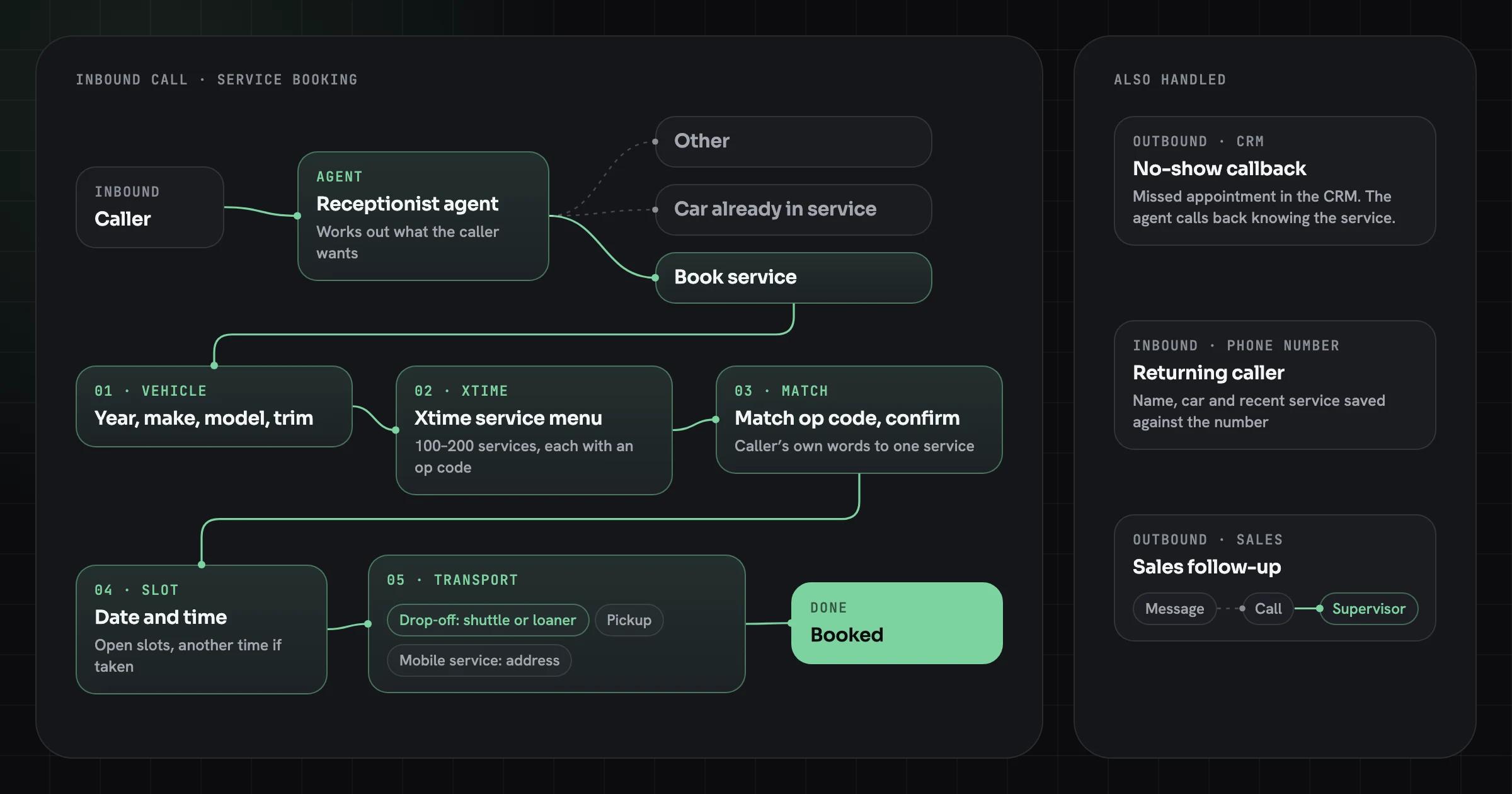 Phone · Messenger · Instagram · XtimeGuidesFAQ
A chatbot answers questions. An agent takes actions, like updating records, sending emails or making decisions, within the rules you set.
Yes. We build remote MCP servers that expose your app’s actions as a short list of tools, behind OAuth, narrow scopes and confirmation steps for anything that moves money or contacts customers. One server works in Grok, Muse custom connectors, Claude and Cursor.
We measure before we trust. Every agent ships with an evaluation set of real cases, confidence thresholds that send uncertain cases to a person, approval steps for actions that move money or reach customers, and an audit log of each decision.
Most engagements start with a 2-week Discovery Sprint ($5,000 fixed fee, credited to your build), followed by a fixed-price build ($25k–$120k per project, 6–16 weeks) or a dedicated team (from $12k per month). The build price is fixed after discovery and billed in milestones tied to demoed features. Model usage is a separate running cost, paid to the model provider from your own account, which we estimate in discovery.
A prototype agent running on your real data takes about two weeks, inside the Discovery Sprint. A production agent with integrations, evaluations, guardrails and monitoring is a fixed-price build of 6–16 weeks, depending on how many systems it touches.
Usually Python with LangGraph for orchestration, MCP for tool access, and models from Anthropic, OpenAI or Google, called directly or through AWS Bedrock or Azure OpenAI. Postgres holds agent state and audit logs. The model stays swappable.
Build in-house when you already employ ML and infrastructure engineers and the agent is core to your product. Hire a team to get the first agent into production at a fixed price, with the code living in your repository from the start so your engineers can take it over.
You do. Code lives in your repository from day one, the IP is yours, and the agent runs in your cloud or on endpoints you control. Model calls go through business API terms that exclude training on your data, with zero data retention where the provider offers it.
Agents need monitoring and regular re-evaluation, because models, prompts and your data change. Every build includes 30 days of support; after that, a monthly retainer or dedicated team covers monitoring, eval runs, model upgrades and new tools.
Yes, if people in the EU use it or its output is used in the EU, even when your company is in the US or UK. You are usually the provider, because the agent runs under your name. Since August 2, 2026 an agent that talks to people must tell them it is an AI at the first interaction, unless that is obvious. High-risk uses such as hiring or credit scoring carry further obligations from December 2, 2027. We build the disclosure, approval steps and audit logs in, and write the provider and deployer roles into the contract.
 Cookies, briefly
We use essential cookies to run the site and, with your OK, analytics and visitor identification. Privacy policy