
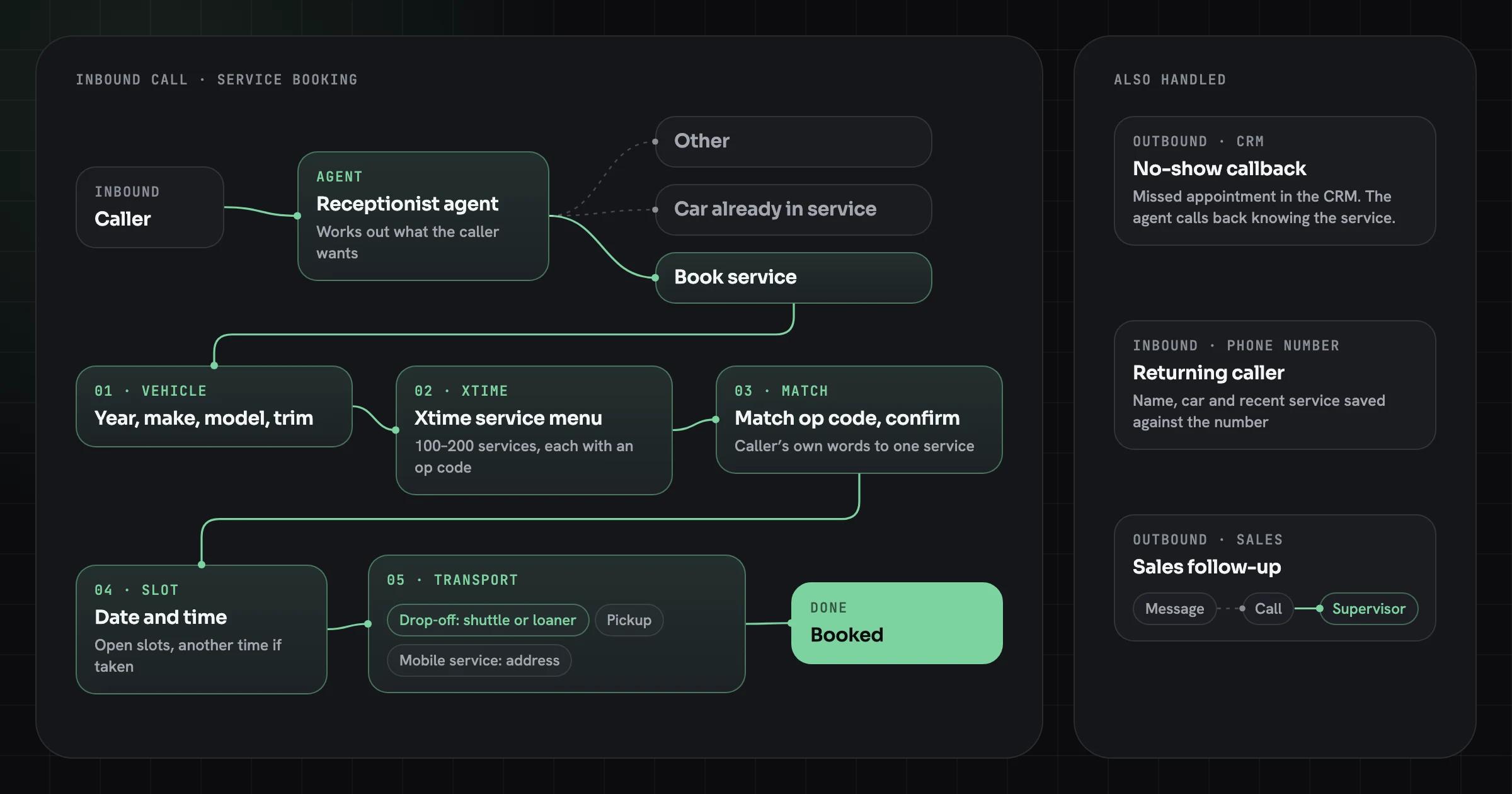


Fintech App & Software Development
Underwriting agents, KYC automation, payment platforms and banking apps — built for compliance from day one.
 What slows you down
Faster decisions. Full audit trail.
For Fintech teams.
We build fintech software for lenders, neobanks, payment companies and wealth platforms: the banking app customers use, the back office behind it and the AI that speeds up decisions. Switch and Freedom Pro are live examples.
AI underwriting & credit-decision agents
Credit-decision agents that read applications, bank statements and bureau data, apply your policy rules and route edge cases to an underwriter.
KYC / AML document automation
Identity verification, document extraction and sanctions screening wired into onboarding, so analysts review exceptions instead of every file.
Payment, wallet and banking apps
iOS, Android and web apps for shared accounts, card issuing, payments and stablecoin wallets, built on bank and BaaS partners such as Thread Bank and Bridge.
Fraud signals and risk dashboards
Transaction-monitoring rules, anomaly scores and case queues that give risk teams one place to review, decide and document.
In detailWhat each app needed from its banking partner
Switch and Freedom Pro both move real money, but they asked different things of their partners. Switch is shared banking: accounts sit at Thread Bank with FDIC pass-through coverage, and members spend through instant Visa virtual and physical cards, with Apple Pay and Google Wallet on top. Our partner work there centered on account roles and card controls such as spend limits, pause and close.
Freedom Pro needed a wallet provider rather than a bank. Bridge holds members’ USD and stablecoin balances and issues the debit cards they spend with, which changes the integration list and the KYC flow. How those two scopes turn into a budget is covered in our fintech app development cost guide.
Selling into the EU or UK
As of October 2026, three rules change a fintech build once European customers are in scope. The EU’s Digital Operational Resilience Act (DORA) has applied since January 17, 2025, and requires financial entities to put key contractual provisions into their contracts with ICT providers, which can include the team that builds and runs their software.
The EU AI Act lists AI that evaluates the creditworthiness of individuals or sets their credit score as high-risk, with an exception for AI used to detect financial fraud. In the UK, a business that provides payment services, account information included, must be authorized or registered by the FCA.
For the build, plan for audit and exit terms in the development contract, a decision log behind every automated credit outcome, a human review step for credit decisions and a clear line between your license and our code. Our EU AI Act and GDPR checklist for AI agents covers the AI side step by step.
Underwriting AI that an examiner can follow
A credit agent is only as useful as the explanation it leaves behind. For each application we store the documents it read, the policy rules that fired, the model version and the output, so an adverse-action notice is generated from the record instead of reconstructed weeks later.
Applications outside policy go to a human queue with the agent’s reasoning attached. Anything a regulator expects to be deterministic stays a written rule; the AI does the reading of bank statements, pay stubs and bureau files that slows underwriters down.
Selected workLive in Fintech.
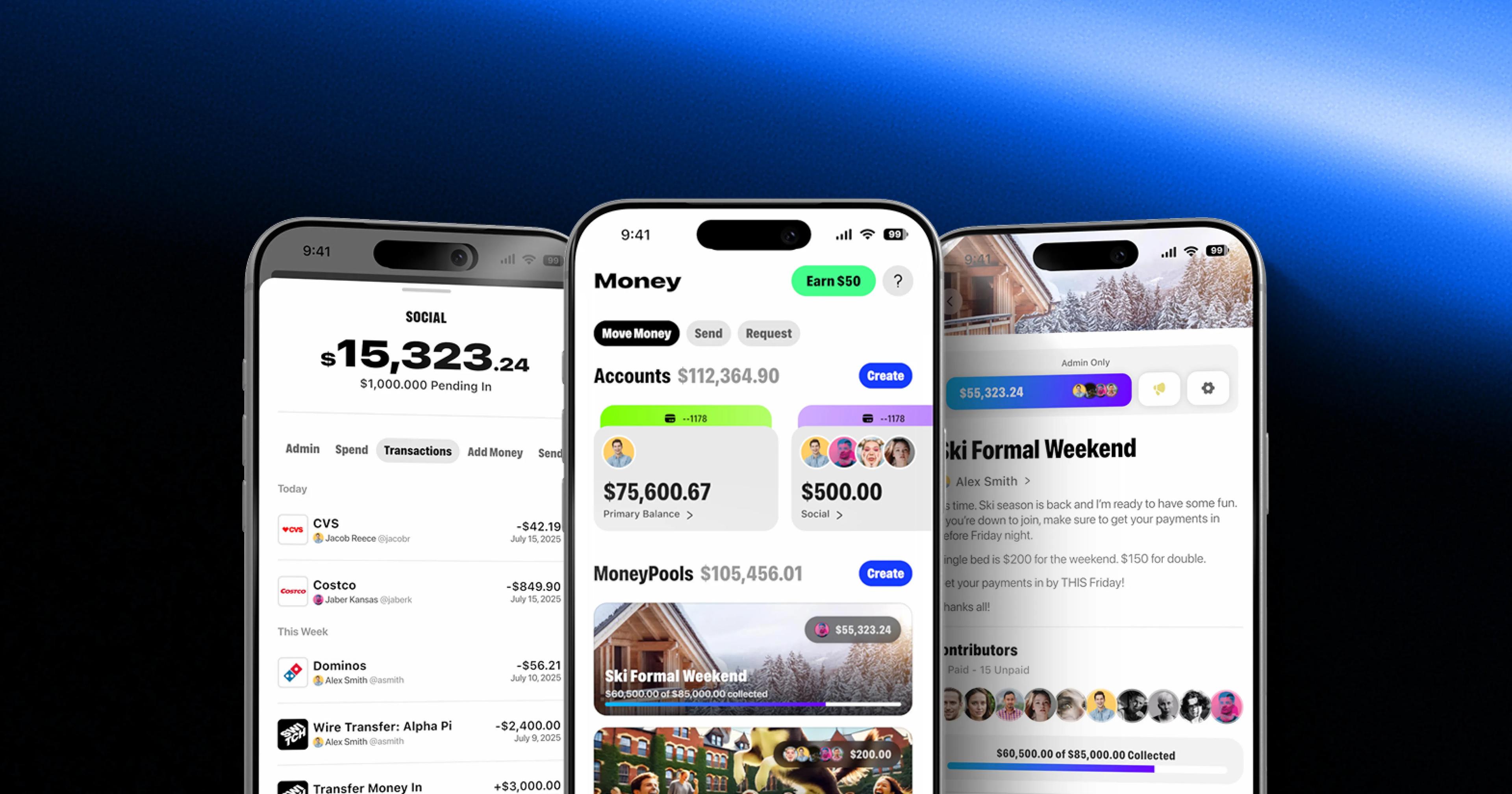 iOS · Android · Web
Switch: shared banking for clubs, teams and friends
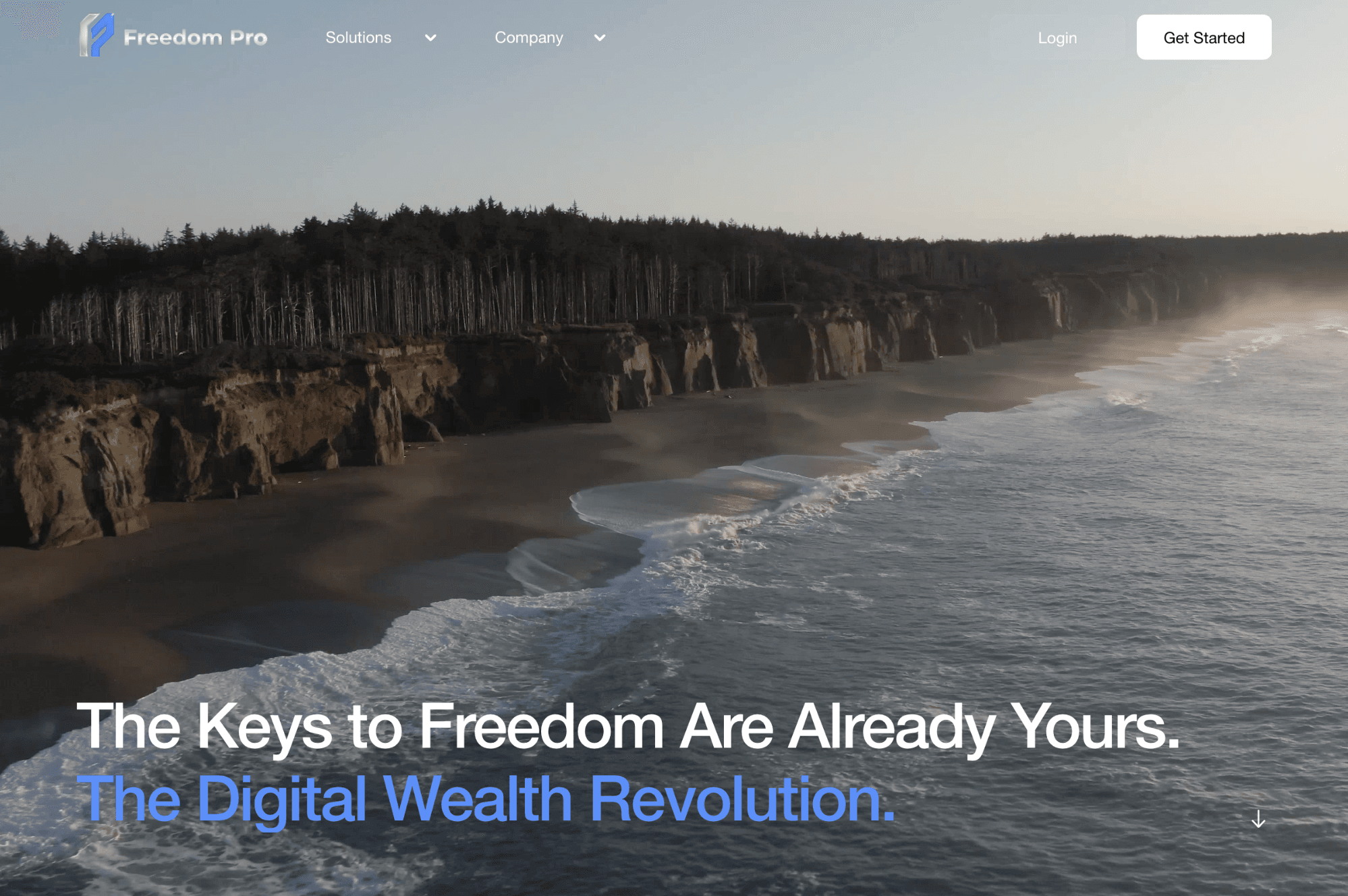 Web · Mobile
Freedom Pro: partner platform with stablecoin wallets and debit cards
Compliance & riskCompliance designed in, not bolted on.
Fintech products inherit obligations from card networks, regulators and the bank partner. We design for them from the first sprint and document the controls your compliance team and sponsor bank will ask about.
PCI DSS scope
Card data stays with the issuer or processor as tokens, never on our servers, and the systems left in scope are built to PCI DSS practices.
Source: PCI Security Standards Council: PCI DSSKYC, CDD and AML
Onboarding collects and verifies identity and beneficial owners the way your bank partner’s program requires, and keeps the evidence for audits.
Source: FinCEN: Customer Due Diligence ruleExplainable decisions
Every automated decision stores its inputs, rules, model version and output, so adverse-action reasons and examiner questions are answered from the log.
Bank partner reviews
Sponsor banks run third-party risk reviews before launch. We deploy in your own cloud account and document encryption, access control and incident response so those reviews have answers ready.
Typical timeline & budgetPublished prices. Fixed after discovery.
Fintech projects follow the same model as every Apptycoons engagement: a 2-week Discovery Sprint, then a 6–16 week fixed-price build, billed in milestones. A focused first fintech release is one app on one bank or wallet partner with one money-movement rail; extra rails and AI decisioning follow in later milestones.
Scope, architecture and a fixed quote for the build. The fee is credited to your build.
Your first release, delivered in demoed milestones, with 30 days of support after launch.
A dedicated squad for ongoing roadmap work once the first release is live.
What moves the price for Fintech projects
- Bank or BaaS partnerTheir onboarding and review steps often set the critical path more than engineering does.
- Money movementCards, ACH, wires or stablecoins each add integrations, reconciliation and failure handling.
- DecisioningRules-only flows cost less than AI underwriting that needs explainability and monitoring.
When you don’t need a custom build
If you need standard consumer accounts and cards with no twist on the product, a BaaS provider’s white-label app ships sooner and costs less than a custom build. Custom pays off when the account model is the product: shared accounts with roles, collection links like MoneyPools, or partner wallets that hold dollars and stablecoins side by side.
FAQCommon questions.
Can AI decisions be audited?
Yes. Every decision is logged with inputs, rules applied and model output, so compliance teams and regulators can trace it.
Do you work with PCI and SOC 2?
We build to PCI-DSS and SOC 2 practices and deploy inside your own cloud account.
How much does fintech software development cost?
Builds are quoted at a fixed price within our $25k–$120k range after a $5,000 Discovery Sprint. For fintech projects, the bank or BaaS partner, the number of money-movement rails and any AI decisioning decide where yours lands.
How long does it take to launch a fintech app?
Most projects start with a 2-week Discovery Sprint, then a 6–16 week build for the first release. Bank-partner reviews and card-program setup run in parallel and can add time, so we start them during discovery.
Can you work with our sponsor bank or BaaS provider?
Yes. Switch runs on Thread Bank with Visa debit cards. We build against your partner’s APIs and prepare the documentation their compliance review asks for.
Do you build stablecoin and crypto wallets?
Yes. Freedom Pro members hold USD and stablecoin balances side by side through Bridge and spend them by debit card. We integrate a regulated provider’s custody and compliance rather than building custody ourselves.
Do you build fintech apps for EU or UK customers?
Yes. We work with US, EU and UK companies. For a European launch we plan for DORA contract terms, FCA authorization or registration for UK payment and account-information services, and the EU AI Act’s high-risk rules for credit scoring. You or your partner hold the license; we build the controls and document them.
Who owns the code and the cloud account?
You do. We deploy into your own cloud account, hand over the repositories and document the system, so your team or another vendor can run it without us.
