


Stablecoin wallet integration: how to add stablecoin wallets to your app in 2026
Provider types, the API flow, the ledger and the 2026 rules in the US and EU, from a team that shipped USD and stablecoin wallets with debit cards.
Listen to the summary ·
Read the transcript
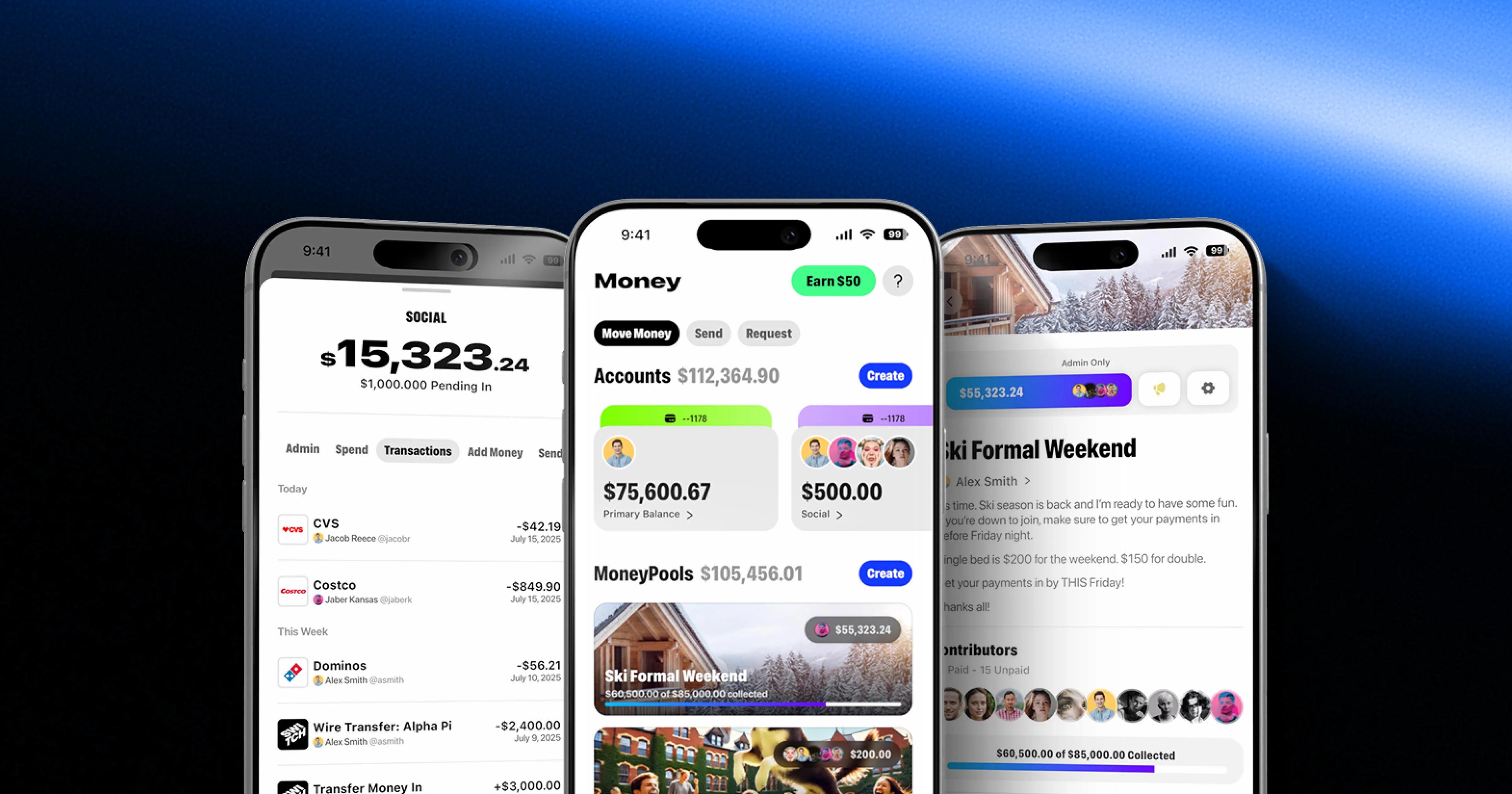
On Freedom Pro, a platform we built, members earn on their team’s activity. The earnings land in a USD or stablecoin wallet, and a debit card spends them. Nobody in that flow has to know what a blockchain is.
The fastest way to add stablecoin wallets is to let a regulated orchestration provider hold the funds and run the regulated steps. Use its hosted identity checks and custodial wallets, launch one transfer type, and add cards second.
Build your own ledger that mirrors every provider event. Let webhooks confirm each state, and reconcile against the provider daily. For retries, Bridge requires an idempotency key on every POST request.
Check two rule sets before launch. In the US, the GENIUS Act takes effect on January 18, 2027, or 120 days after final regulations if that comes first. As of October 18, 2026, no final rule had been published. Issuers may not pay holders interest or yield, so run any rewards idea past counsel. In the EU, the coin itself has to fit MiCA. Circle says USDC and EURC are issued in the EU in compliance with it.
Stablecoins are the wrong rail when users need what a bank account gives them, such as deposit insurance, checks and ATMs. The guide below walks through the integration call by call.
AI-generated voice summary of this guide.

A Freedom Pro member signs up, picks the services they already pay for, and earns on their team’s activity. The earnings land in a USD or stablecoin wallet, and a debit card spends them. Nobody in that flow has to know what a blockchain is. Behind it sit a stablecoin provider’s API, a ledger we built, and a lot of decisions about who holds the money.
This guide covers those decisions in the order a product team meets them: which kind of infrastructure to use, how the integration works call by call, what the 2026 rules mean in the US and the EU, and when stablecoins are the wrong tool.
The fastest way to add stablecoin wallets to an existing app
The fastest way is to let a regulated orchestration provider hold the funds and run the regulated steps, while your app owns onboarding screens, the ledger and the interface. You integrate through its API instead of holding crypto yourself.
A first release that ships quickly usually looks like this:
- Hosted identity checks. Use the provider’s hosted KYC flow at first. Building your own document capture can wait.
- Custodial wallets. The provider creates and holds a wallet per customer. You never touch private keys.
- One transfer type. For example, bank dollars in through a virtual account and converted to a dollar stablecoin. Add withdrawals and wallet-to-wallet sends after the first one is reconciled daily without surprises.
- Cards second. A card program adds lifecycle states, disputes and spend controls. Launch it once balances are trusted.
Bridge’s documentation shows how much of this one provider can cover: virtual accounts that accept USD, EUR, GBP, MXN and more, each with a unique account and routing number; orchestration APIs for on-ramps, off-ramps and crypto-to-crypto transfers; custodial wallets; cards backed by stablecoins; and issuance of your own stablecoin.
Four kinds of stablecoin wallet infrastructure
Stablecoin infrastructure comes in four broad kinds, and the kind you pick decides who holds keys, how much you build and how much regulatory weight lands on you. Vendor lists mix them together, so separate them before you compare prices.
| Kind | Who holds keys and funds | What you build | Regulatory weight on you | Example in vendor docs |
|---|---|---|---|---|
| Custodial orchestration | The provider, in custodial wallets per customer | Onboarding UI, ledger, transfer screens, support tools | Lower: the provider runs custody and the regulated flows | Bridge: virtual accounts, orchestration APIs, custodial wallets |
| Embedded user wallets | The user or your app, depending on how the wallet is set up | Wallet UX, recovery, transaction signing, on- and off-ramps | Depends on whether you ever control user funds | Privy, listed in Stripe’s docs to “create and manage crypto and stablecoin wallets for users, businesses, and agents” |
| Platform balances and cards | The platform provider, on your business account | Treasury flows, payouts, card controls | Lower, but tied to that provider’s program rules | Stripe: stablecoin balances, payouts to third parties in more than 160 countries, stablecoin-backed cards |
| Issuance | You, as the brand behind a coin, through an issuer partner | Treasury, mint and burn operations, distribution | Highest: issuer rules apply | Bridge issuance API to “issue your own stablecoin” |
Most fintech and platform products start in the first row. Embedded wallets fit crypto-native users. Issuance is a business decision about becoming a stablecoin brand, not a wallet feature, and under the GENIUS Act it brings issuer-level rules.
Custodial or non-custodial: who holds the keys decides your obligations
Whoever can move the funds carries the obligations, so decide custody before you design screens. In a custodial model the provider holds the keys; in a non-custodial model the user does, and your app helps them sign.
The OCC’s 2026 proposal shows how regulators think about it. As summarized by Mayer Brown, a custodian has “control” of a tokenized asset when “no other party can transfer the asset on a distributed ledger without the custodian’s consent.” That is a useful test for your own design: if your servers can move a user’s balance without them, assume you are in a custody conversation, and take it to counsel.
For consumer products, custodial wallets with a regulated provider are the practical default. Users get password resets and support. You get a partner that runs sanctions screening and can freeze an account when asked.
- The provider holds the keys
- Users get password resets and support
- The provider runs sanctions screening and can freeze an account
- The user holds the keys
- Your app helps them sign
- Suits users who want to hold their own keys
How a stablecoin wallet integration works, step by step
An integration is a sequence of provider objects and events that your ledger mirrors one for one. The exact names vary by provider; the shape is the same:
- Create the customer in the provider with your own user ID stored beside the provider’s ID.
- Run identity checks, hosted or through the API, and listen for the result by webhook.
- Open the money objects: a wallet, a virtual account for bank deposits, or both.
- Move money with a transfer request: deposit, conversion, withdrawal or send.
- Receive webhooks for every state change and write each one to your ledger.
- Reconcile your balances against the provider’s records on a schedule.
- Issue a card on the balance, once the steps above run cleanly.


Each object moves through states, and each state needs its own screen copy. These are the ones a first release has to handle:
| Object | State | What the user sees | What your system does |
|---|---|---|---|
| Customer | Approved | Full access | Open wallet and virtual account |
| Customer | Pending review | “We’re checking your details”, with a time estimate | Block money movement, poll or wait for webhook |
| Customer | Rejected | A plain reason and a support route | No wallet; keep the record for audit |
| Customer | Limited | Which limit applies | Enforce the limit server-side on every request |
| Transfer | Pending | Amount, destination, “in progress” | Reserve the amount in your ledger |
| Transfer | Completed | Receipt with reference | Post the final entry, release the reserve |
| Transfer | Failed or returned | What happened and what to do next | Reverse with a new ledger entry, never an edit |
For retries, Bridge’s API reference requires an Idempotency-Key header on every POST request and says not to send one with GET, PUT, PATCH or DELETE. The key holds for 24 hours after the first request, a retry must send the identical request body, and reusing the key after the 24 hours returns a 422 error.
Ledger rules that prevent wrong balances
Most bugs in wallet products are ledger bugs, not interface bugs. Your ledger is the record your support team, your finance team and your users read, and the provider’s records are what it must match.
- Store both IDs. Every customer, wallet, destination and transfer carries your ID and the provider’s ID side by side, so support can search either.
- Append, never edit. A reversal or a fee is a new entry linked to the original one.
- Let webhooks drive state. Your app requests; the provider’s events confirm. A screen never shows “completed” on the strength of an API response alone.
- Replay safely. Webhooks arrive twice and out of order. Process them by event ID, idempotently.
- Reconcile daily, alert on any difference. A wallet that shows “pending” honestly loses less trust than one that shows a wrong balance for a few minutes.
What the GENIUS Act means for a product team in 2026
The GENIUS Act is the US federal law for payment stablecoins, and its rules are still being finished. It was signed on July 18, 2025, and takes effect on January 18, 2027, or 120 days after final implementing regulations if that comes first.
Where the rulemaking stands, as of October 18, 2026:
- Jul 18, 2025Signed into law
- Feb 25, 2026OCC proposes its rulesNew 12 CFR Part 15 (Mayer Brown’s summary).
- May 1, 2026Comments due
- Jul 18, 2026Statutory deadline passesNo final rules yet.
- Oct 15, 2026“In the very near term”The Comptroller on publication of the final rule.
- Jan 18, 2027Takes effectOr 120 days after final regulations, if that comes first.
- No final rule yet. Comptroller Jonathan Gould said on August 19, 2026: “We will have a final rule out by November” (reported by PYMNTS). At DC Fintech Week on October 15 he said publication was expected “in the very near term”, and the OCC was reported to be targeting the end of October (GNcrypto, October 16, 2026). As of October 18, 2026 no final rule had been published. Check the OCC’s news releases before you rely on any detail below.
- Reserves: permitted issuers hold identifiable, segregated reserve assets backing outstanding coins at least one to one.
- Yield: issuers may not pay holders interest or yield, and the proposal would create a rebuttable presumption that certain affiliate and third-party arrangements involving issuers violate that ban.
- AML and sanctions standards come in a separate proposal.
Three product decisions follow. Pick coins and providers that will operate as permitted issuers or work with them. Run every “rewards on your balance” idea past counsel before design, because a third-party arrangement is exactly what the proposal looks at; Stripe, for example, documents rewards on eligible stablecoin balances for its own business Treasury accounts, which is a different product from a consumer feature you build. And expect identity and sanctions checks to stay strict, because for your provider they are a legal obligation.
Serving EU users: MiCA and which stablecoin you offer
In the EU the coin itself has to fit MiCA, so the stablecoin you offer may differ by market. MiCA treats dollar and euro stablecoins as e-money tokens, and on January 17, 2025 ESMA and the European Commission said national regulators should make sure crypto-asset service providers stop offering non-compliant tokens as soon as possible, and no later than the end of the first quarter of 2025.
Circle says it holds an e-money institution license from France’s ACPR and that USDC and EURC are issued in the EU in compliance with MiCA (Circle press release, July 1, 2024). For an EU launch that usually means three checks:
- A coin whose issuer is authorized under MiCA, such as USDC or EURC, confirmed with the provider on the day you launch.
- A provider or partner licensed to serve EU users, not only US ones.
- Screens and disclosures reviewed for each market you open.
We haven’t shipped an EU stablecoin product yet, so read this section as guidance from the public sources above, not as experience, and not as legal advice.
Design for people who don’t care about crypto
Most users want dollars that move fast, so show balances in USD, hide chain details by default, and make the card the hero.
Use words like “balance”, “send” and “card” in the main flows, not “wallet address” or “network”. Advanced users can still find the chain, the transaction hash and the destination on a detail screen. Confirm every outgoing transfer with the amount and destination in plain words, because a stablecoin sent to the wrong address is hard to get back. Receipts matter more as money moves faster.
When stablecoin wallets are the wrong choice
Stablecoins are the wrong rail when your users need what a bank account gives them: deposit insurance through a partner bank, checks, cash deposits and ATMs. In that case a partner bank and a card program fit better.
Switch, a shared banking app we built for clubs and teams, made exactly that choice: Thread Bank as its FDIC-insured partner bank and Visa debit cards, with no stablecoins. Stablecoins earn their place when money crosses borders, settles outside banking hours, or lands as platform earnings that users want to hold and spend in one account, as they do on Freedom Pro.
What adding stablecoin wallets does to timeline and budget
A focused wallet integration fits inside one of our fixed-price builds of $25k–$120k, delivered in 6–16 weeks after discovery; what moves it up the band is how many money paths it has. These are the usual drivers, in our judgment:
- Transfer types. Each one (deposit, conversion, withdrawal, send, payout) adds states, webhooks, failure screens and reconciliation rules.
- Cards. Card lifecycle, limits, disputes and wallet provisioning add a second integration.
- Markets. US plus EU means two coin and partner checks and two sets of disclosures.
- Your own onboarding UI instead of the provider’s hosted flow.
- Operations tooling. Search by provider ID, holds, case notes and exports for support and compliance.
Provider fees, KYC checks and card program costs come on top and are usage-based. For full scopes of two fintech products and their line items, see our guide to fintech app development cost; our pricing page lists the Discovery Sprint and build terms.
Launch checklist for stablecoin wallets
Before real money moves, check each of these:
- Money flows drawn end to end, with counsel’s sign-off on who holds funds at each step.
- Sandbox tests for every transfer type, including failures, returns and late webhooks.
- One idempotency key per user intent, stored with the transfer and reused inside the provider’s window.
- Webhook replay test: the same events delivered twice and out of order leave balances unchanged.
- Daily reconciliation with alerts, and a support view that searches by provider ID.
- Onboarding tested for approved, pending-review, rejected and limited customers.
- Coin and provider confirmed for every market you launch in.
- Copy reviewed for anything that implies deposit insurance, interest or yield on a stablecoin balance.
- Limits for new accounts and a fast way to freeze one when the provider asks.
How Freedom Pro uses it
On Freedom Pro, stablecoin wallets are where a partner network gets paid. Partners earn on their team’s activity in the back office, and earnings arrive in USD or stablecoin (USDC) balances that members spend by debit card, under the same single sign-on as the platform’s wireless, streaming and wellness services. Bridge provides the wallets and the card program; we built the product around it, from the member portal to the back office. That makes Freedom Pro a bundled financial services platform as much as a direct-selling one, and the commission side is covered in our guide to MLM software and commission engines.
If you are adding wallets or cards to an existing product, our fintech app development team starts with the provider choice and the money flows, then builds the ledger and the apps.
Sources
- Bridge API documentation, Bridge
- Idempotence, Bridge API reference
- Stablecoins and crypto, Stripe docs
- OCC Proposes Comprehensive Rulemaking to Implement the GENIUS Act, Mayer Brown
- OCC targets October end for GENIUS Act stablecoin rules, GNcrypto
- ESMA and European Commission publish guidance on non-MiCA compliant ARTs and EMTs, ESMA
- Circle is First Global Stablecoin Issuer to Comply with MiCA, EU’s Landmark Crypto Law, Circle
Mobile App Development
Native and cross-platform iOS and Android apps, from fintech and streaming to connected hardware, designed, built and launched to the stores.
