


 Web · Mobile
Fintech · MLM · Aggregator
Freedom Pro: partner platform with stablecoin wallets and debit cards
USD + stablecoinwallets via Bridge
High-performance SaaS products, portals, dashboards and marketplaces, with clean architecture, fast UX and the integrations your business runs on.
 What you get
Multi-tenant products with roles per tenant, subscription billing, an admin panel and an audit log, built so new plans and features don’t need a rewrite.
Partner, customer and member portals with dashboards, onboarding flows and reporting, such as a back office that tracks teams, ranks and commissions.
Two-sided platforms with payments, payouts, holds, refunds and statements, plus the admin tools your team needs to settle disputes.
CRMs, ERPs, payment rails, banking and data APIs, from Stripe and QuickBooks to wallet and card providers such as Bridge, with retries and reconciliation.
Server-rendered, accessible front ends with SEO built in, measured against Core Web Vitals before launch.
Internal tools, exports and reports your operations team uses daily, so routine support questions don’t need an engineer.
Architecture and fixed plan.
Sprints with live demos.
Security, load and QA.
Deploy, monitor, iterate.
First releaseThis is our default cut for a first release, and discovery adjusts it to your product. The goal is something customers pay for, on a data model that is ready for the parts that come later.
Sign-in and roles, tenant separation in the data model, subscription billing, an admin panel, an audit log of who changed what, and the one integration the product can’t sell without.
Single sign-on, usage-based billing, a public API and white-labeling. Each one extends the first release, because the tenant and role model was designed for it from the start.
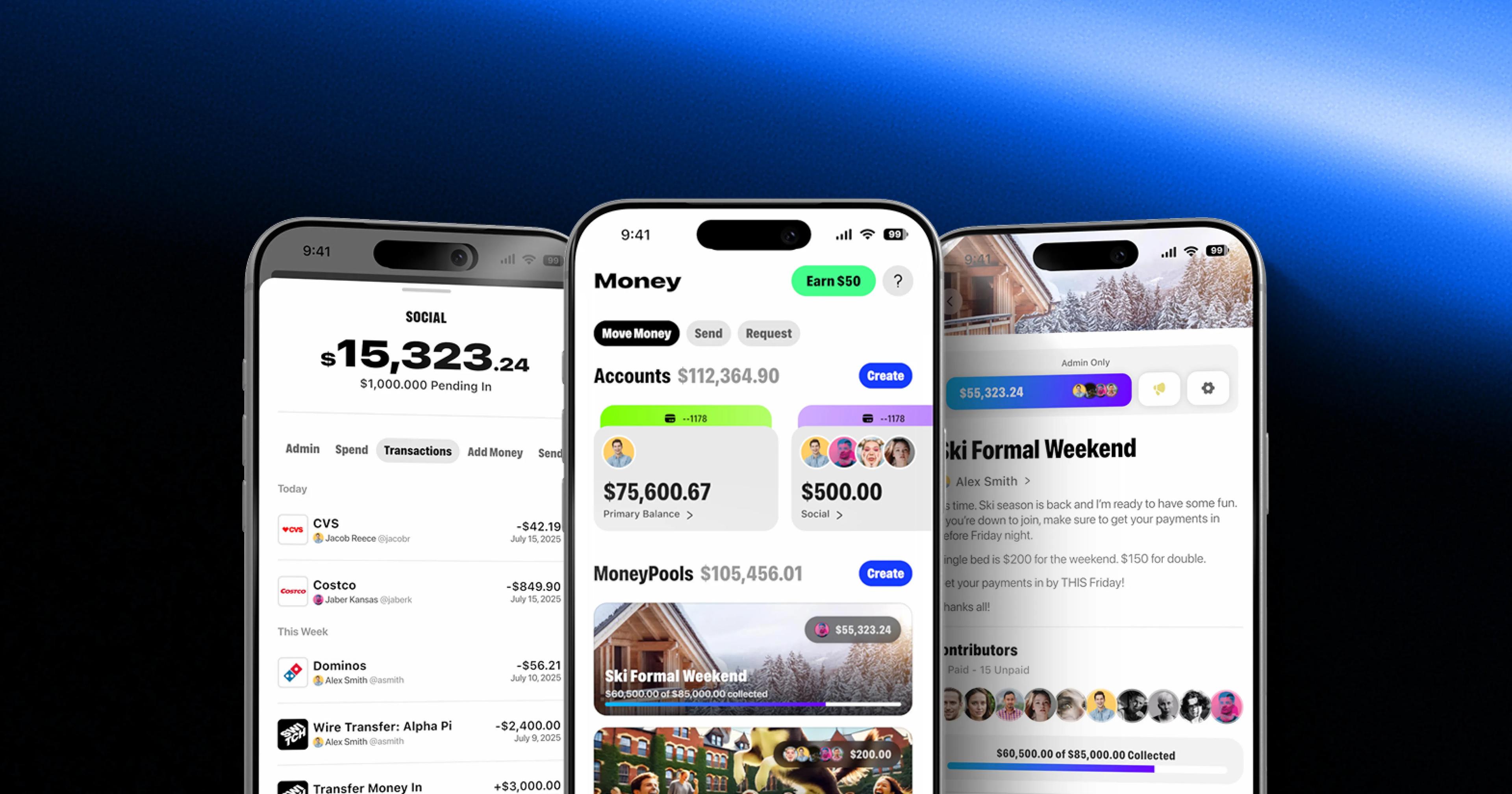
Partner sign-up, a team genealogy view, ranks and commissions, one member portal for 6+ service verticals, and USD and stablecoin wallets with debit cards through Bridge, on web and mobile.
Off-the-shelf tracking usually costs less, until your commission rules stop fitting it. Build or buy affiliate tracking
You see working software every two weeks instead of a status report, so scope questions surface early.
Our rule: fix the scope of the first release, not the whole product. A fixed price only works when both sides know what ships first. Fixed price vs time and materials
Stack by categoryBuild or buyBuying is cheaper until your rules, your margins or your product don’t fit someone else’s software.
| Your situation | Our recommendation |
|---|---|
| A standard workflow a SaaS tool already covers | Buy the SaaS tool |
| The platform is the product you sell | Build custom |
| Your rules don’t fit: commissions, payouts, partner onboarding | Build custom |
| You still need to prove demand | Ship a scoped MVP, then extend it |
Our recommendation: buy commodity tools; build the platform that makes you money.
Typical engagementArchitecture, data model, roles and integrations planned, with a fixed build quote.
A production web platform with admin, integrations, security review and launch.
Ongoing features and integrations shipped in two-week sprints.
Built by one in-house team, from discovery to launch and support. AI makes us fast; a senior engineer decides what goes live. Meet the team
What moves the price: the number of user roles, integrations (payments, banking, CRMs), multi-tenancy, and the admin and reporting you need. Compare engagement models
Selected workWeb · Mobile Web platformGuidesFAQ
Usually Next.js and TypeScript on the front end, Node, Go or Python services behind it, and Postgres for data, deployed to Vercel or your own cloud. If your team already runs a different stack, we build in it so they can maintain the result.
Yes. Most of our builds connect to CRMs, ERPs, payment providers or banking APIs.
Yes. 30 days of post-launch fixes come with every build. After that, a monthly retainer or a dedicated team handles new features, integrations and upgrades.
Most engagements start with a 2-week Discovery Sprint ($5,000 fixed fee, credited to your build), followed by a fixed-price build ($25k–$120k per project, 6–16 weeks) or a dedicated team (from $12k per month). The build price is fixed after discovery and billed in milestones tied to demoed features. Hosting, third-party APIs and payment processing fees are separate running costs, billed to your own accounts, which we estimate in discovery.
Scope and architecture are fixed in a two-week Discovery Sprint. An MVP or first production release is a fixed-price build of 6–16 weeks, with live demos every two weeks.
You do. Code is in your repository from day one and deploys to your own Vercel, AWS, Azure or GCP account, so you can bring the work in-house at any time.
Yes. Tenant separation goes into the data model from the first release, with roles per tenant and subscription billing wired to your payment provider. Adding single sign-on, usage-based plans or a public API later extends that model instead of replacing it.
Yes. We design the data model and roles for the product you expect in a year, then ship the smallest useful slice first, so growing the product means extending it, not rewriting it.
Role-based access, encryption in transit and at rest, dependency and security reviews, and load testing before launch, plus monitoring and alerts once the app is live.
Buy when a SaaS product already fits your workflow and pricing. Build when the platform is your product, when your rules (commission plans, payouts, onboarding) don’t fit a vendor, or when per-seat fees outgrow the cost of a build.
 Cookies, briefly
We use essential cookies to run the site and, with your OK, analytics and visitor identification. Privacy policy