


MLM software cost in 2026: what to build, what to buy and what breaks at scale
Compensation plans, genealogy trees and payouts look simple until you have 100,000 distributors. Here is what matters.
Listen to the summary ·
Read the transcript
Most direct-selling companies start on an off-the-shelf MLM platform. It works until the compensation plan changes, the distributor count passes a few thousand, or the mobile experience starts costing you recruits.
Buy a platform when your plan is conventional and launching fast matters most. The software directory Capterra lists Exigo from $5,000 per month, flat rate. Build custom when the software is part of the product, such as a hybrid plan, near real-time earnings, or payouts into a wallet or onto a card. Many companies combine both, keeping a platform for orders and the commission run, and building custom apps and payouts around it.
Commission engines rarely fail on day one. They fail when the plan changes, a period has to be re-run, or the genealogy grows deep. Store the plan as versioned rules, and record each commission as a ledger entry with its source order and rule.
Compliance lives in the software too. The FTC looks at whether rewards come from sales to real customers rather than recruitment, so track retail customers separately from distributor purchases.
If you migrate, run both systems in parallel for at least one full commission cycle, and switch payouts only when both produce the same numbers.
The guide below works through a binary commission example and what breaks at 100,000 distributors.
AI-generated voice summary of this guide.

Most direct-selling companies start on an off-the-shelf MLM platform. It works until the compensation plan changes, the distributor count passes a few thousand, or the mobile experience starts costing you recruits.
What breaks after that is predictable, and most of it can be designed out before it costs you a payout run.
Where off-the-shelf platforms struggle
- Hybrid compensation plans that mix binary, unilevel and matrix rules.
- Commission runs that take hours and need manual fixes.
- Dated distributor apps that new recruits abandon.
- Payouts that can’t reach modern wallets or cards.
None of these is a flaw in the platforms themselves. They are built to run the plans most companies use, and they do that well. The friction starts when your plan, your payout model or your member experience is the thing that sets you apart, and every change has to wait for a vendor roadmap or a paid customization.
Build, buy or combine?
Buy when your compensation plan is conventional and launching quickly matters more than differentiation. Established platforms come with commission engines that are already in use at other companies, plus replicated sites, e-commerce and reporting. They are not cheap: the software directory Capterra lists Exigo, one of the best-known enterprise platforms, from $5,000 per month, flat rate. But they are proven.
Build when the software is part of the product:
- Your plan mixes structures in ways the platform can only approximate.
- Distributors need near real-time earnings, not a nightly or weekly run.
- Earnings should land in a wallet or on a card, not only a bank transfer.
- You sell bundled services, such as subscriptions or financial products, that the platform does not model.
- Commission engine already in use at other companies
- Replicated sites, e-commerce and reporting included
- Changes wait for a vendor roadmap or paid customization
- Hybrid plans a platform can only approximate
- Near real-time earnings, not a nightly or weekly run
- Earnings land in a wallet or on a card
Combine the two when only part of the stack is the differentiator. A common pattern keeps a platform for orders and the commission run, and builds custom distributor apps, onboarding and payouts around it. We compare the main options, and how to migrate between them, in Exigo alternatives: when custom MLM software wins.
What MLM software costs in 2026
MLM software costs either a recurring platform fee or a one-off build plus running costs, and the two are hard to compare until your plan is written down. On the platform side, the software directory Capterra lists Exigo from $5,000 per month, flat rate; most enterprise vendors don’t publish prices at all. Packaged MLM scripts are cheaper to start with, and what they buy you is a set of templates: the further your plan sits from them, the more of the saving goes on customization.
On the custom side, our model is a two-week Discovery Sprint ($5,000, credited to the build) that turns your compensation plan into written rules, then one fixed price inside our $25k–$120k range, delivered in 6–16 weeks. Where an MLM build lands in that band depends on four things. The placements below are our judgment, not client budgets:
| Driver | Toward the lower end | Toward the upper end |
|---|---|---|
| Compensation plan | One structure (binary or unilevel) with a few ranks | Hybrid plan with compression, matching bonuses, caps and qualification windows |
| Payouts | Bank transfer through one payout provider | In-app wallets, debit cards or stablecoins, several currencies |
| Apps | Web back office and enrollment funnel | Web back office plus iOS and Android distributor apps |
| Migration | New company, no history | Years of genealogy and commission history, re-run in a parallel cycle |
Add the time for at least one commission cycle run in parallel with your old system before payouts switch. That cycle sets the go-live date more often than the code does. For a three-year view of platform fees against a custom build, use the exit and pricing questions in our Exigo guide above.
Compensation plan types your engine must handle
The compensation plan decides how much of the engine is hard. These are the structures most plans combine:
- Binary: each distributor has two legs, and commissions usually pay on the volume of the weaker leg, with carry-forward rules for the stronger one.
- Unilevel: unlimited frontline recruits, with commissions paid on a set number of levels below each distributor.
- Matrix: a fixed width and depth, so new recruits beyond the width spill over to lower levels.
- Stair-step and breakaway: ranks raise the commission percentage, and leaders who reach a rank break away into their own group with an override.
- Hybrid: any mix of the above, plus fast-start, matching and leadership bonuses.


Around the structure sit the rules that cause most commission errors: rank qualification windows, compression when inactive distributors are skipped, caps, breakage, and how returns and refunds claw back commissions already paid.
A worked binary commission example
A binary payout is simple arithmetic repeated across thousands of people, which is why small rule ambiguities turn into large payout errors. Here is one distributor over two weeks under a common binary rule: 10% of the weaker leg’s volume, the stronger leg’s unused volume carried forward, and a weekly cap of 100. These are illustrative numbers, not a client plan.
| Period | Left leg (new + carried) | Right leg (new + carried) | Weaker leg | Commission at 10% | Carried forward |
|---|---|---|---|---|---|
| Week 1 | 1,200 + 0 | 700 + 0 | 700 | 70 | 500 left |
| Week 2 | 300 + 500 | 1,400 + 0 | 800 | 80 | 600 right |
The table looks settled until the questions start, and each one is a rule your engine has to store:
- Refunds. If a 200-point order in the left leg is refunded in week 2, is week 1 recalculated and the difference clawed back, or is the refund deducted from week 2’s left leg?
- The cap. If week 2 had paid 130, does the 30 above the cap disappear, or carry forward as volume?
- Flush. Many plans reset carried volume when a distributor misses a qualification, so the 600 points on the right may be worth nothing next week.
- Compression. In the unilevel part of a hybrid plan, if a distributor two levels down is inactive, the next active distributor below moves up a level for that period, which changes who earns on whose volume.
Write the answer to each question into the plan document before anyone builds, and keep a test period like this one for every rule. When the engine and the document disagree, the document wins, and the test tells you which code to change.
What a custom platform should include
- A rules-driven compensation engine you can change without a rewrite.
- Genealogy, ranks and bonuses calculated in near real time.
- E-wallets and debit cards so earnings are spendable immediately.
- A distributor app that makes enrollment and team tracking effortless.
Add an admin back office with commission previews, adjustments and an audit trail, an enrollment funnel that works on a phone, and reporting that finance and compliance can both use.
How to design a commission engine that doesn’t break at scale
Commission engines rarely fail on day one. They fail when the plan changes, a period has to be re-run, or the genealogy grows deep. Five design choices prevent most of that:
- Store the plan as versioned rules, not code, so each period is calculated with the rules that applied at the time.
- Make every run deterministic and repeatable: the same inputs always produce the same payout, so a corrected period can be re-run safely.
- Record every commission as a ledger entry with its source order and rule, so any distributor’s statement can be explained line by line. Affiliate programs need the same ledger, which is why the trade-offs in affiliate commission tracking: build vs buy carry over almost unchanged.
- Treat returns and clawbacks as first-class events, not manual adjustments.
- Preview runs before they pay out, and test with synthetic genealogies far larger than today’s network.
- Versioned rulesThe plan as it applied that period
- Deterministic runSame inputs, same payout
- Ledger entriesSource order and rule on every line
- PreviewChecked before anything pays out
- PayoutStatements explained line by line
What breaks at 100,000 distributors
Scale problems in MLM software are predictable, which means they can be designed out. The usual pressure points are:
- Deep genealogy queries: calculating volume across many levels gets slow if every query walks the tree from scratch, so store precomputed paths or closures and update them as the network changes.
- Period close: thousands of distributors check their earnings at the same moment the commission run finishes, so statements should be generated ahead and served from a cache.
- Event spikes: enrollment surges during launches and conventions, so the sign-up flow and payment provider must handle bursts without double-charging or losing a placement.
- Mobile performance: team views with thousands of members need pagination and search, not one long list.
- Support load: when an earning looks wrong, support staff need the same line-by-line explanation the ledger gives finance.
Test each of these with synthetic data well above your current size before a launch event, not after.
Compliance is part of the software
Compliance in direct selling is mostly about evidence, and the evidence lives in your software. The FTC’s business guidance on multi-level marketing focuses on whether rewards come from sales to real customers rather than recruitment, looks at how the company operates in practice rather than what its policies say, and requires earnings claims to be truthful, substantiated and typical of what participants earn.
That translates into concrete features: tracking retail customers separately from distributor purchases, reporting personal consumption, producing earnings data for income disclosures from real payouts, and keeping marketing claims in the app consistent with that data. This is not legal advice, and your counsel should define the rules; the point is to build the platform so it can prove them.
“Your compensation plan is your product. The software should bend to it — not the other way around.”
Payouts: wallets, cards and bundled services
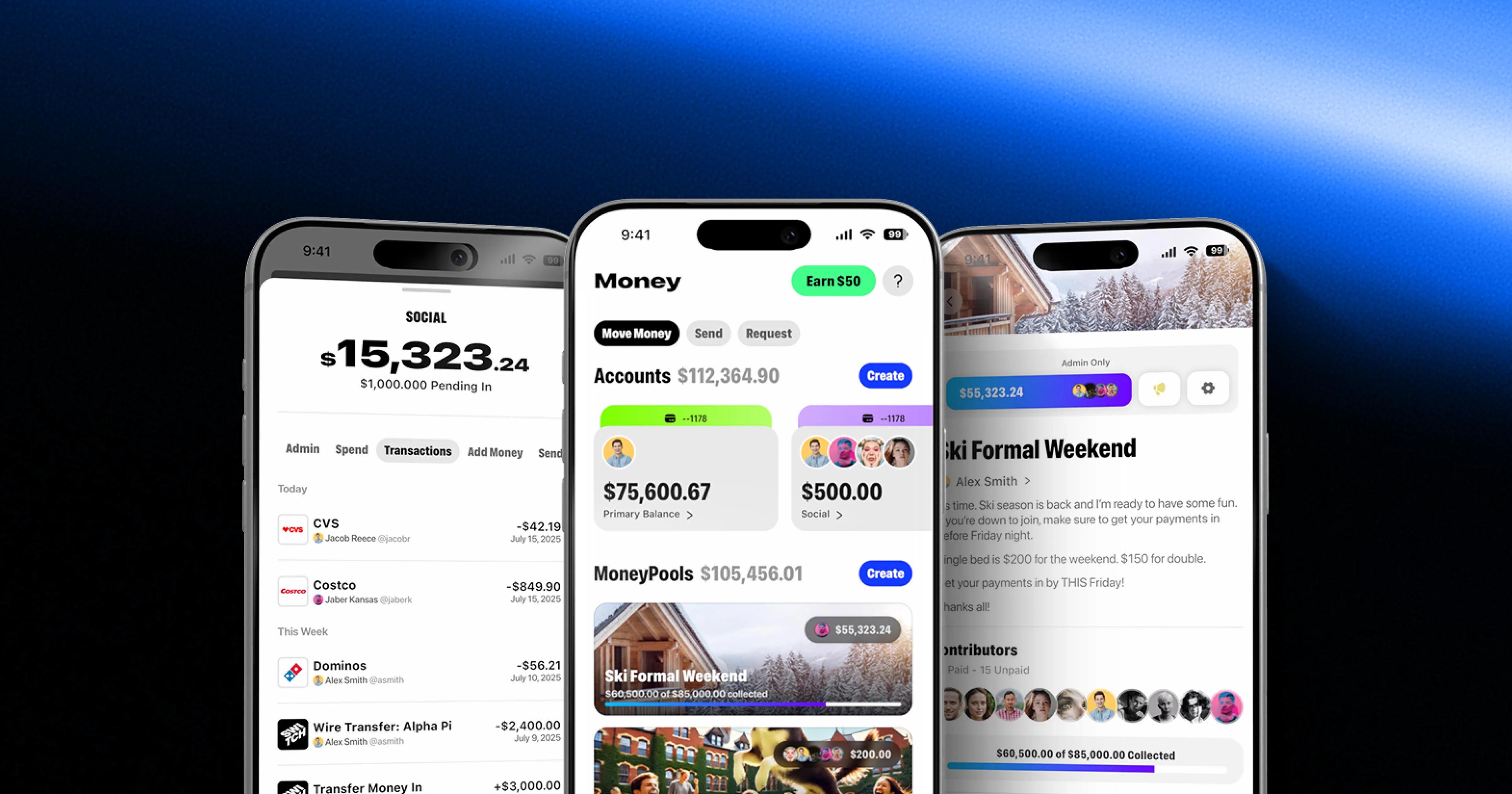
For Freedom Pro, we combined a partner back office with Bridge-powered USD and stablecoin wallets and debit cards, so partners earn and spend in one place.
Its wireless, streaming, wellness and finance services sit behind one member account, and partners enroll customers, track their team and get paid from a single dashboard. The full build is in the Freedom Pro case study, and the wallet side is covered in how stablecoin wallets fit into an app. Whatever the rail, distributors judge payouts by their statements: a schedule they can predict and a line for every amount, the same payout schedules and statements problem creator platforms face.
Moving off a platform without breaking commissions
If you are migrating, run both systems in parallel. Move distributors, genealogy and commission history first, recalculate past periods in the new engine, and switch payouts only when both produce the same numbers. Distributors forgive a new app; they do not forgive a wrong commission. The Exigo guide linked above has a step-by-step version of this plan, from exit terms to cut-over.
- Step 1Move the dataDistributors, genealogy and commission history.
- Step 2Recalculate past periodsRe-run them in the new engine.
- Step 3Run both systems in parallelFor at least one full commission cycle.
- Step 4Switch payoutsOnly when both systems produce the same numbers.
If you are weighing a custom build, our MLM software development work starts with your compensation plan and payout model, and you can see how we price discovery and fixed-price builds on our pricing page.
Sources
- Business Guidance Concerning Multi-Level Marketing, Federal Trade Commission
- Exigo pricing and profile, Capterra
Web App Development
High-performance SaaS products, portals, dashboards and marketplaces, with clean architecture, fast UX and the integrations your business runs on.
