

Affiliate Tracking & Custom CRM Development
Affiliate tracking, partner portals and custom CRMs with AI lead scoring and automated follow-up.
 What slows you down
Track every lead. Pay every partner.
For Affiliate & CRM teams.
We build affiliate tracking platforms, partner portals and custom CRMs for teams whose attribution rules, payout logic or sales process don’t fit an off-the-shelf tool. Superdeal, where an AI agent runs creator campaigns from shortlist to payout, shows how we approach it.
Affiliate tracking, attribution and payouts
Server-side click and conversion tracking, configurable attribution windows and commission rules, and scheduled payouts with clear statements.
Partner and reseller portals
Self-serve portals where affiliates, resellers and creators get links and assets, see conversions and download payout history.
Custom CRMs fitted to your pipeline
Pipelines, objects and automations shaped around how your team sells, or extensions to HubSpot or Salesforce when that is enough.
AI lead scoring + voice agent follow-up
Models that score and route new leads, plus voice and messaging agents that follow up fast, with every touch logged to the CRM.
In detailSuperdeal: tracking the deal, not the click
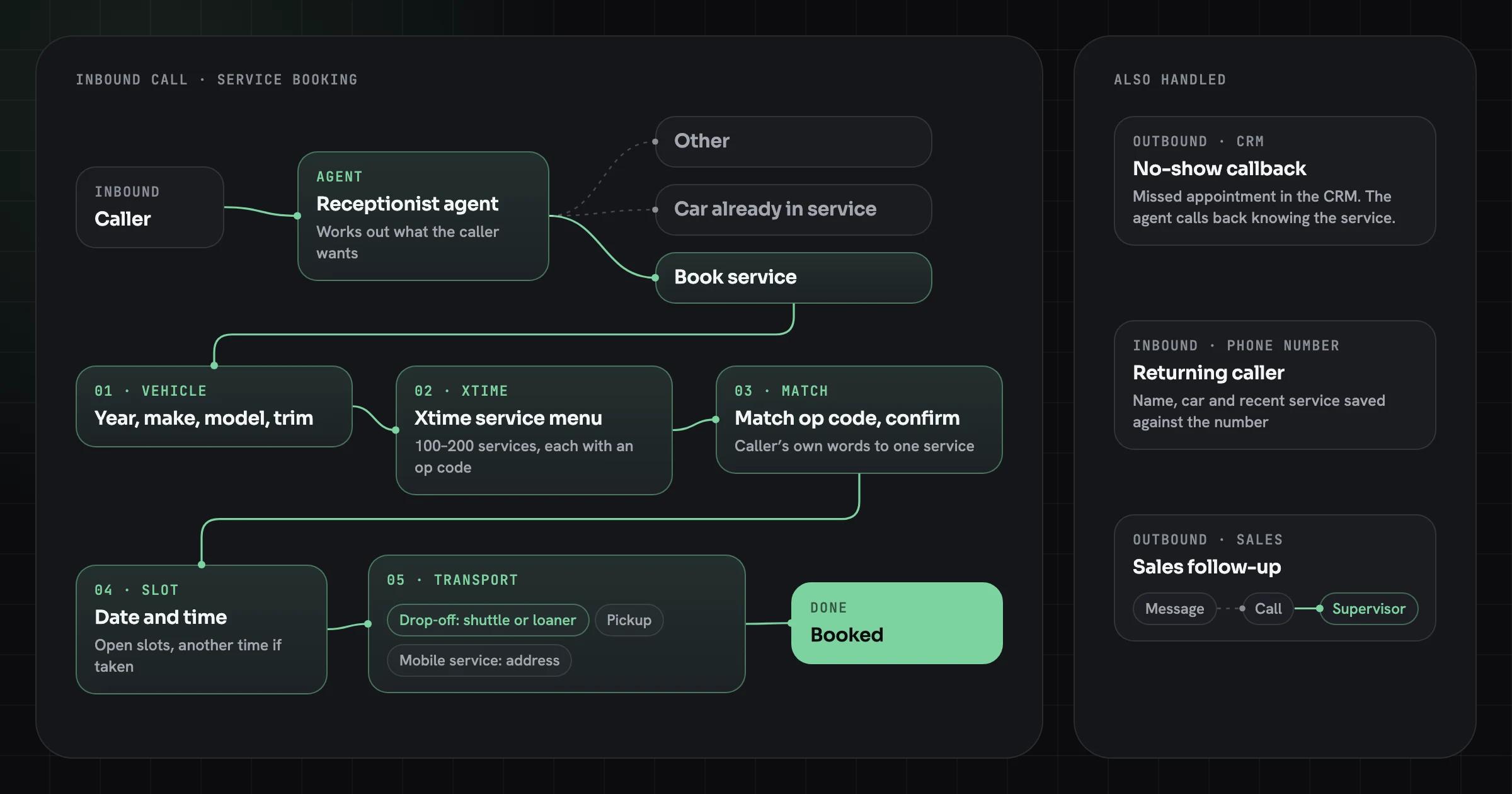
In creator marketing the unit worth tracking is the deal. Superdeal’s campaign CRM follows each creator deal from shortlist to payment: the offer, the product shipment, the deliverables and the content approval. Payment releases when the brand approves the content, and brands pay no subscription or seat fees.
Because the deal is the record, we build campaign reporting as a list of deals and their states: offered, product shipped, content delivered, content approved, paid. How the agent finds creators and drafts the offers is in the Superdeal case study.
Attribution rules we build
The attribution model decides who gets paid, so we write it down before any code. These are the rules we implement most often, and what each one needs:
- Last clickThe last tracked partner link before the sale wins. It needs only click and conversion events and is the easiest rule for partners to check.
- First clickCredit goes to the partner who introduced the customer. It needs a long identity window, held server-side, and a written rule for returning customers.
- Position or time decayCredit is split across several partner touches. Every touch is stored per customer, and statements show the split line by line.
- Coupon codeA partner’s code at checkout claims the sale, which works where links can’t, such as podcasts and video. Codes leaked to coupon sites are the main risk.
- Server-to-server postbackThe merchant’s server reports the conversion directly, so it survives blocked cookies and app installs. It needs an integration on the merchant side.
Holding conversions before payout
A conversion becomes payable only after a review window you set per offer, usually matched to your refund period. During that window, refunds and chargebacks reverse the commission automatically, and checks flag self-referrals, click spam and sudden spikes from a single source. Partner statements list every reversal with its reason, so partners can see why a number changed.
Selected workLive in Affiliate & CRM.
 Web platform
Superdeal: an AI agent that runs creator campaigns end to end
Compliance & riskClean data. Honest partners.
Affiliate and CRM systems process personal data and pay people based on it. Trust in the numbers is the product.
Partner disclosures
The FTC expects affiliates to disclose their relationship with the brand clearly and conspicuously. Portals can ship approved disclosure text with every link.
Source: FTC: Endorsement Guides, what people are askingFraud before payout
Conversions sit in a review window before they become payable, so refunds, self-referrals and click spam are reversed before a partner is paid, not clawed back after.
Consent and opt-outs
Consent captured at sign-up, and unsubscribe and deletion requests honored across CRM, email and calling tools, including quiet hours.
Typical timeline & budgetPublished prices. Fixed after discovery.
Affiliate & CRM projects follow the same model as every Apptycoons engagement: a 2-week Discovery Sprint, then a 6–16 week fixed-price build, billed in milestones. Phase one is tracking, attribution and payout statements for the partners you already have; portals and AI follow-up come next.
Scope, architecture and a fixed quote for the build. The fee is credited to your build.
Your first release, delivered in demoed milestones, with 30 days of support after launch.
A dedicated squad for ongoing roadmap work once the first release is live.
What moves the price for Affiliate & CRM projects
- Attribution rulesMulti-touch or custom windows cost more than last-click.
- Payout railsPaying partners in many countries or currencies adds providers and tax-form handling.
- Build or extendExtending HubSpot or Salesforce usually costs less than a CRM from scratch.
When you don’t need a custom build
Use a SaaS tracker or an affiliate network when last-click tracking and its payout options fit your program; it is cheaper to start and someone else runs it. Build when attribution or payout logic is part of your product. The arithmetic is in our guide to build vs buy affiliate tracking costs.
FAQCommon questions.
Can you extend HubSpot or Salesforce instead?
Yes. We often build on top of existing CRMs, and build custom only when the process needs it.
How is fraud handled in affiliate tracking?
Server-side tracking, click and conversion validation, and anomaly detection flag suspicious traffic before payout.
Should we build affiliate tracking or use a SaaS tool?
Use a SaaS tool when standard tracking and its payout options fit. Build when attribution, payout logic or the partner experience is part of your product, or per-partner fees outgrow a one-time build.
What did you build for Superdeal?
A campaign CRM where an AI agent shortlists creators across Instagram, TikTok and YouTube, explains why each fits and drafts offers. Every consequential step goes Draft, Review, Send, so the brand approves before anything goes out.
How much does affiliate and CRM software development cost?
Builds are quoted at a fixed price within our $25k–$120k range after a $5,000 Discovery Sprint. For affiliate and CRM projects, attribution rules, payout rails and whether we extend an existing CRM decide where yours lands.
How long does a custom affiliate platform take?
Most projects start with a 2-week Discovery Sprint, then a 6–16 week build for the first release. Phase one covers tracking, attribution and partner statements; portals and AI follow-up come in later milestones.
Can you pay partners in many countries?
Yes, through a payouts provider that collects tax forms, verifies identity and pays in local currencies. We build the commission ledger and the statements; the provider moves the money.
Can partners see their conversions as they happen?
Yes. The partner portal shows clicks, conversions, pending commissions and reversals, and each pending commission shows the date it becomes payable.
