



Real Estate AI & Software Development
Property portals, agent apps and AI agents that qualify buyers and book viewings around the clock.
 What slows you down
Every inquiry answered. Every viewing booked.
For Real Estate teams.
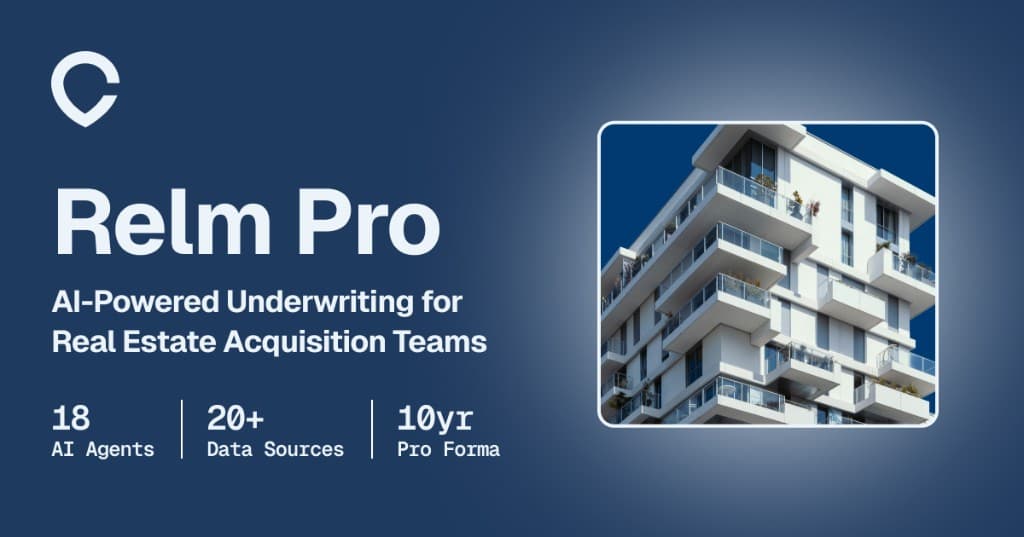
We build AI and software for commercial real estate investors, brokerages and proptech companies. Our lead example is Relm: specialist AI agents that turn a property address into a sourced Intel Report and a 10-year pro forma in minutes.
CRE due-diligence and underwriting agents
Agents that research tax records, units, comps and your documents in parallel and build a pro forma where every number cites its source, as in Relm.
Property portals with smart search
Listing search with maps, filters and saved searches, plus natural-language search across your inventory.
AI agents that qualify and book viewings
Chat and voice agents that answer inquiries after hours, ask your qualifying questions and book viewings into agent calendars.
Agent and tenant mobile apps
Apps for agents in the field and tenants after move-in: showings, documents, maintenance requests and payments.
MLS / listing feed integrations
RESO Web API and listing-feed integrations that keep listings, photos and status in sync within each MLS’s display rules.
In detailMLS data: the RESO Web API, not RETS
A new MLS integration should start on the RESO Web API. It is a RESTful API built on the OData V4 standard, and RESO has deprecated RETS, the older transport, which it no longer supports. Each MLS still sets its own display rules for listings, photos and status, so the feed is built against those rules and the license terms of every MLS you join.
What AI should and shouldn’t do in underwriting
AI is good at the reading in a deal: pulling public records, abstracting rent rolls, offering memorandums and leases, and drafting a first-pass pro forma with each number tied to the page it came from. Analysts own the assumptions, the exit cap rate and the decision.
Extraction is tested on a labeled sample of your own documents before rollout, field by field, because rent-roll formats differ from one property manager to the next. We report the misses per field, not one average accuracy number.
After-hours inquiries for brokerages
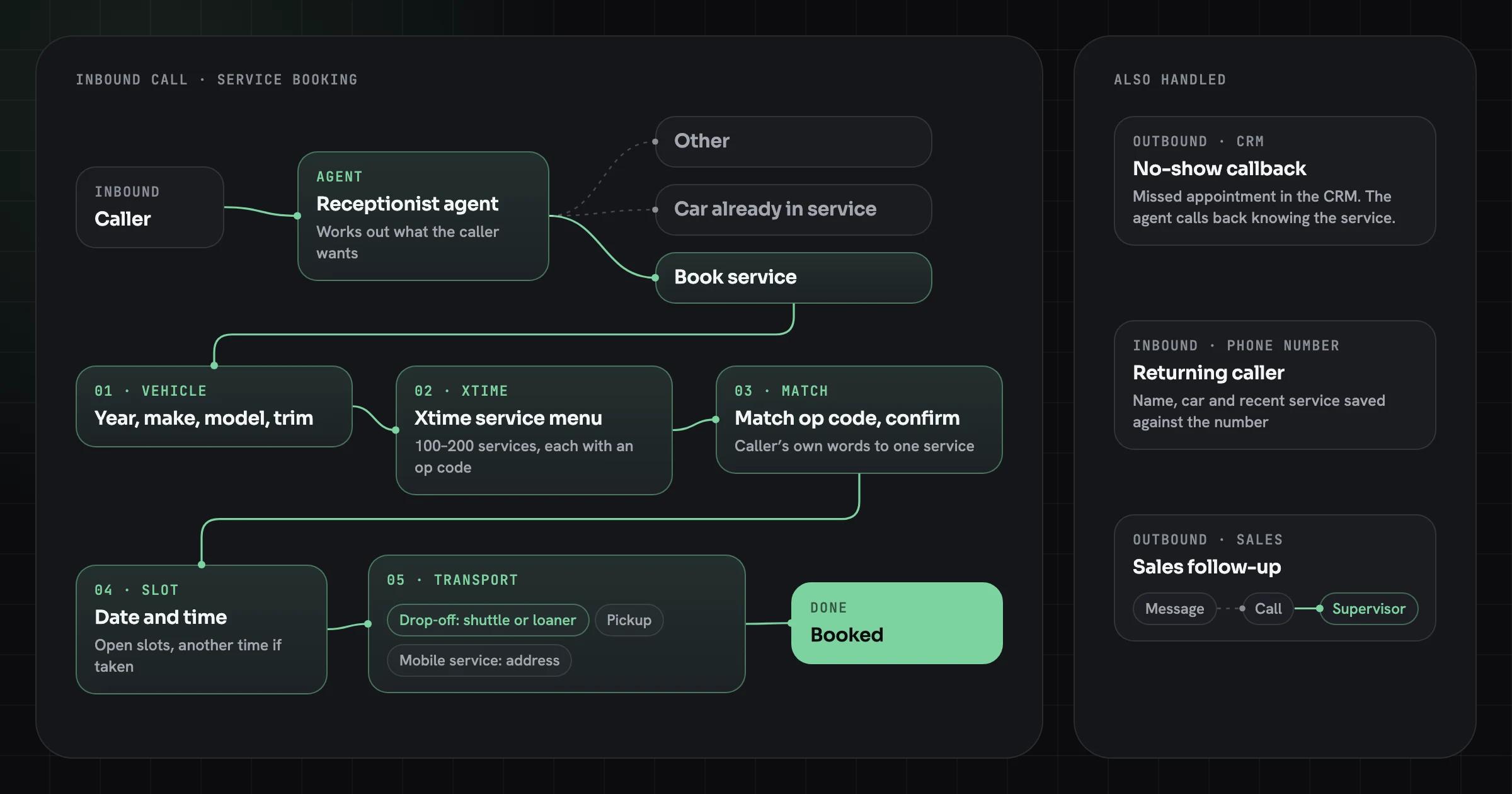
Inquiries that arrive at night can be answered at night. A chat or AI voice agent asks your qualifying questions, books viewings into agent calendars and logs every conversation to the CRM, so agents start the morning with booked showings instead of voicemail.
The Fair Housing Act limits what it may ask. Qualification sticks to budget, timing, location and property needs, and the agent never filters, steers or comments on protected characteristics. What unanswered calls add up to is in our guide to the cost of missed calls.
Selected workLive in Real Estate.
 Web platform
Relm: multi-agent AI that finds hidden deal risk in commercial real estate
Compliance & riskFair, sourced and secure.
Real estate software makes recommendations about people, property and money. Three rules shape how we build it.
Fair housing
The Fair Housing Act bars housing ads and statements that show a preference based on protected characteristics. Lead agents and search are built not to filter or steer on that basis.
Source: 42 U.S.C. 3604: Fair Housing ActSourced numbers
In Relm every finding links back to the record it came from. Underwriting tools should show sources and assumptions so analysts can check them before an LOI.
Tenant isolation
Each client’s deal data is isolated across database, vector store and AI context, with AES-256 encryption and an audit trail, as in Relm.
Typical timeline & budgetPublished prices. Fixed after discovery.
Real Estate projects follow the same model as every Apptycoons engagement: a 2-week Discovery Sprint, then a 6–16 week fixed-price build, billed in milestones. Begin with one agent workflow, such as due-diligence research or lead qualification, on your own data sources before a multi-agent system.
Scope, architecture and a fixed quote for the build. The fee is credited to your build.
Your first release, delivered in demoed milestones, with 30 days of support after launch.
A dedicated squad for ongoing roadmap work once the first release is live.
What moves the price for Real Estate projects
- Data sourcesEach paid data feed or MLS adds licensing terms and integration work.
- Agent countA single-task assistant costs less than a multi-agent system with a pro forma.
- DocumentsExtraction from rent rolls, OMs and leases needs accuracy testing on your files.
When you don’t need a custom build
For listing search on a single brokerage site, an IDX vendor’s website is usually enough. Custom software makes sense for internal deal workflows on proprietary data, or when the search experience is what sets your brokerage apart.
FAQCommon questions.
What does Relm do?
Relm turns a US property address into a sourced Intel Report and a 10-year pro forma in minutes. Specialist agents research taxes, units, comps and documents in parallel, and every finding cites its source.
Can AI underwrite commercial real estate deals?
AI can do the research and the first-pass model: pulling records, abstracting documents and drafting a pro forma with sources. The investment decision stays with your analysts, who review the flagged risks and assumptions.
Can the AI agent book viewings directly?
Yes. It checks agent calendars, books the slot and sends confirmations by SMS and email.
Do you integrate with MLS feeds?
Yes. New integrations use the RESO Web API, which runs on the OData V4 standard and replaces the deprecated RETS transport, and we follow each MLS’s display and license rules for listings, photos and status.
How much does real estate software development cost?
Builds are quoted at a fixed price within our $25k–$120k range after a $5,000 Discovery Sprint. For real estate projects, paid data feeds, the number of agents and document volume decide where yours lands.
Can a lead agent screen tenants or buyers?
Only on what fair housing law allows. It asks about budget, timing, location and property needs, and never filters or steers anyone on protected characteristics such as race, religion, sex, familial status or disability.
How do you test document extraction?
On a labeled sample of your own rent rolls, offering memorandums and leases. Every extracted field is checked against the source, misses are reported by field, and fields that fall short get a human review step before rollout.
