


Financial Aggregator Platform Development
Open-banking aggregators and comparison platforms that unify accounts, rates and products in real time.
 What slows you down
Every account. One clear view.
For Financial Aggregators teams.
We build comparison and aggregation platforms that pull accounts, rates and products from many providers into one experience, then route each user to the right offer. Freedom Pro, which bundles six-plus service verticals and wallets in one account, is our closest live example.
Open-banking and account aggregation (Plaid and similar)
Account linking and transaction data through aggregators such as Plaid, MX or TrueLayer, or direct bank APIs, normalized into one data model.
Rate and product comparison engines
Rate and product data ingested from partner APIs and feeds, refreshed on a schedule, with stale offers hidden automatically.
AI-powered recommendations and insights
Recommendations that explain why a product fits, with the ranking rules written down so they can be reviewed.
One-click application and lead routing
Pre-filled applications and lead routing to partners, with consent recorded and every referral’s status tracked.
In detailSection 1033 open banking rule: where it stands
As of October 18, 2026, the CFPB’s Section 1033 rule is final on paper but not enforced. The CFPB issued the Personal Financial Data Rights rule in October 2024, with compliance dates phased by institution size and starting April 1, 2026 for the largest data providers. A federal court in the Eastern District of Kentucky has enjoined the CFPB from enforcing it, and that first date passed without enforcement.
The CFPB reopened the rule with an advance notice of proposed rulemaking on August 22, 2025, asking about four issues: who counts as a consumer’s representative, fees, data security and data privacy. Until a revised rule is published, we build account linking to the stricter reading: consent per purpose, one-tap revocation, data minimization and a record of what was shared with whom. Those controls cost less to build in than to add after launch.
Aggregator, direct bank APIs or UK open banking
The connection layer is the first architecture decision, and it sets both coverage and running cost.
- AggregatorPlaid, MX, Yodlee or TrueLayer handle the bank connections and normalize the data, for a fee. The fastest route to many institutions.
- Direct bank APIsMore control and no middleman fee for a few high-volume banks, at the price of one integration and one contract per bank.
- UK open bankingAccount information services need registration with the FCA as an AISP, or a regulated provider’s service. Confirm the route with counsel.
Keeping rates fresh and rankings fair
A comparison page loses trust the first time a user clicks a rate that no longer exists. Each partner feed gets a refresh schedule and a freshness limit; an offer past its limit is hidden until the feed updates, and a monitor flags feeds that stop changing. Paid placements carry a label, and the ranking rules are written down and versioned, so you can show a partner or a regulator why an offer ranked where it did on a given day.
Freedom Pro: six-plus services behind one login
Freedom Pro takes the bundle model further than rate comparison. One member account at myfreedompro.com holds wireless service, the MyPro TV streaming app, wellness and mindset programs, a trade club and Pro GPS, next to USD and stablecoin wallets and a debit card. Read the Freedom Pro case study for the build; the wallet and card side is on our fintech app development page.
Selected workLive in Financial Aggregators.
 Web · Mobile
Freedom Pro: partner platform with stablecoin wallets and debit cards
 iOS · Android · Web
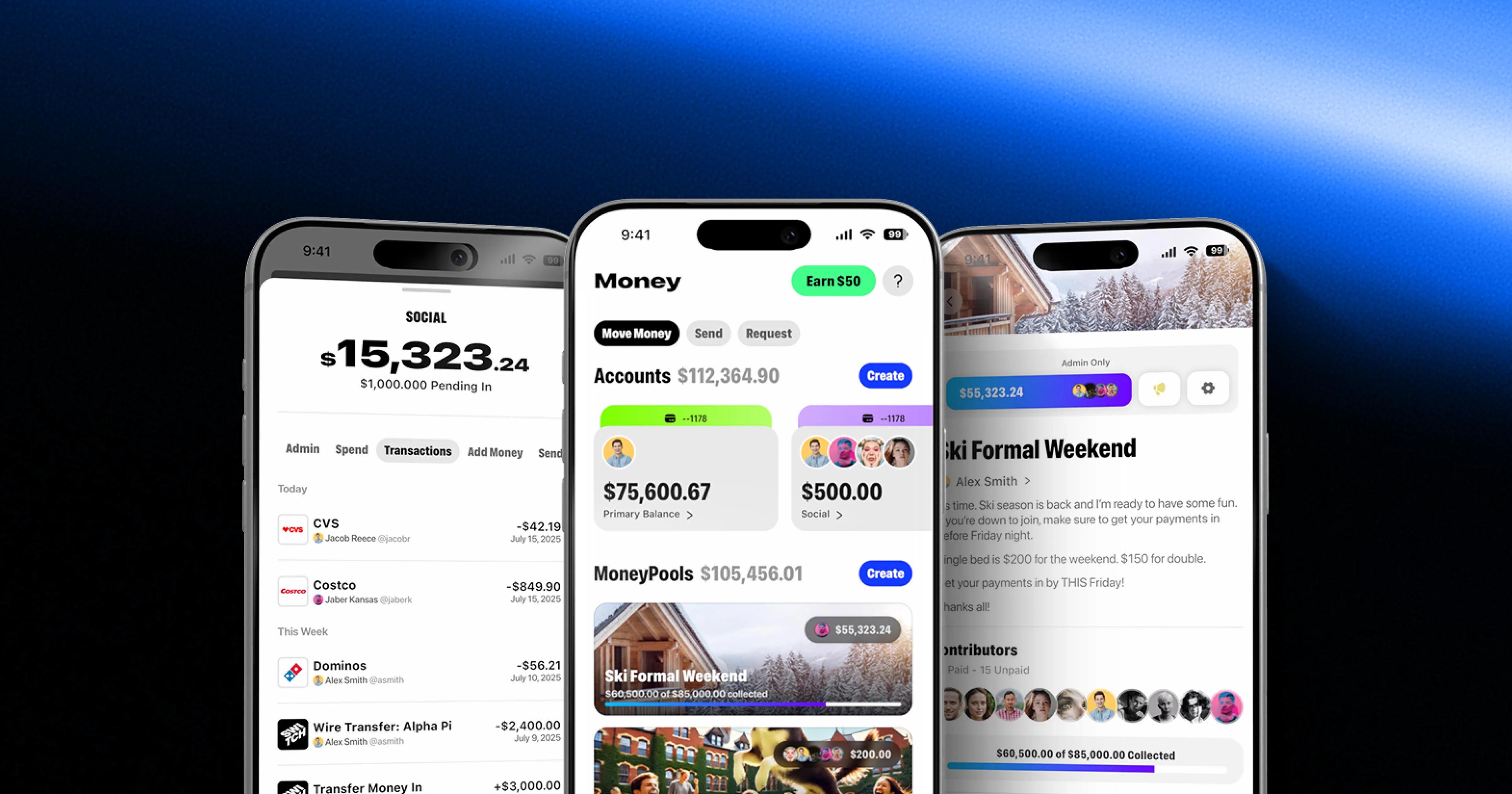
Switch: shared banking for clubs, teams and friends
Compliance & riskConsent, data rights and fair ranking.
Aggregators sit between consumers and financial institutions, so they inherit obligations from both sides.
Consumer data rights
Section 1033 gives consumers the right to share their financial data with apps they choose. As of October 2026 the CFPB’s 2024 rule is blocked by a court order and under reconsideration, so we build consent, revocation and data-use limits into account linking either way.
Source: 12 CFR Part 1033: Personal Financial Data RightsSafeguards Rule
Non-bank financial companies need a written security program built on a risk assessment, with customer data encrypted and multi-factor authentication for anyone who accesses it. We build those controls and document them for your program owner.
Source: 16 CFR Part 314: FTC Safeguards RuleFair ranking
Paid placements are labeled, and the ranking logic is documented so it can be explained to partners, users and regulators.
Typical timeline & budgetPublished prices. Fixed after discovery.
Financial Aggregators projects follow the same model as every Apptycoons engagement: a 2-week Discovery Sprint, then a 6–16 week fixed-price build, billed in milestones. Launch with one product category and a handful of providers, then add categories and one-click applications as partners sign on.
Scope, architecture and a fixed quote for the build. The fee is credited to your build.
Your first release, delivered in demoed milestones, with 30 days of support after launch.
A dedicated squad for ongoing roadmap work once the first release is live.
What moves the price for Financial Aggregators projects
- ProvidersEach aggregator, bank API or partner feed adds mapping and monitoring.
- FreshnessReal-time rates cost more than daily refreshes.
- ApplicationsOne-click apply through partner APIs costs more than referral links.
When you don’t need a custom build
If you only need account balances inside an existing app, an aggregator’s hosted link flow and dashboard may be all you need. Build when comparison, routing or the bundle itself is your product.
FAQCommon questions.
Which aggregation providers do you support?
Plaid, MX, Yodlee, TrueLayer and direct bank APIs, depending on region.
What is a financial aggregator?
A financial aggregator is an app or platform that pulls accounts, rates or products from many providers into one view. It connects through aggregators such as Plaid or MX, direct bank APIs or partner feeds, and often routes each user to apply for the offer that fits.
Is the CFPB Section 1033 rule in effect?
Not in practice. As of October 18, 2026, the rule the CFPB finalized in October 2024 is blocked by a federal court injunction, its first compliance date of April 1, 2026 passed without enforcement, and the CFPB is reconsidering it after an August 2025 advance notice. We build consent and revocation controls either way.
How is financial data secured?
With the controls the FTC Safeguards Rule expects from non-bank financial companies: a written security program based on a risk assessment, encryption of customer data in transit and at rest, MFA on every staff account that can reach customer data, tokenized bank credentials and access logs.
Should we use an aggregator or connect to banks directly?
Use an aggregator when you need many institutions quickly; it handles connections and normalization for a fee. Direct bank APIs give more control for a few high-volume banks. Many platforms start with an aggregator and add direct connections later.
Can one platform bundle financial and non-financial services?
Yes. Freedom Pro combines wireless, streaming, wellness and finance services with USD and stablecoin wallets and debit cards behind one login.
How much does financial aggregator software development cost?
Builds are quoted at a fixed price within our $25k–$120k range after a $5,000 Discovery Sprint. For financial aggregator projects, the number of providers, data freshness and partner application APIs decide where yours lands.
Do you need FCA registration to aggregate UK bank data?
Generally, yes. Providing account information services in the UK as a business requires FCA registration as an account information service provider, unless you are already authorized another way or exempt. Some platforms use a regulated provider’s service instead; confirm the route with counsel.
